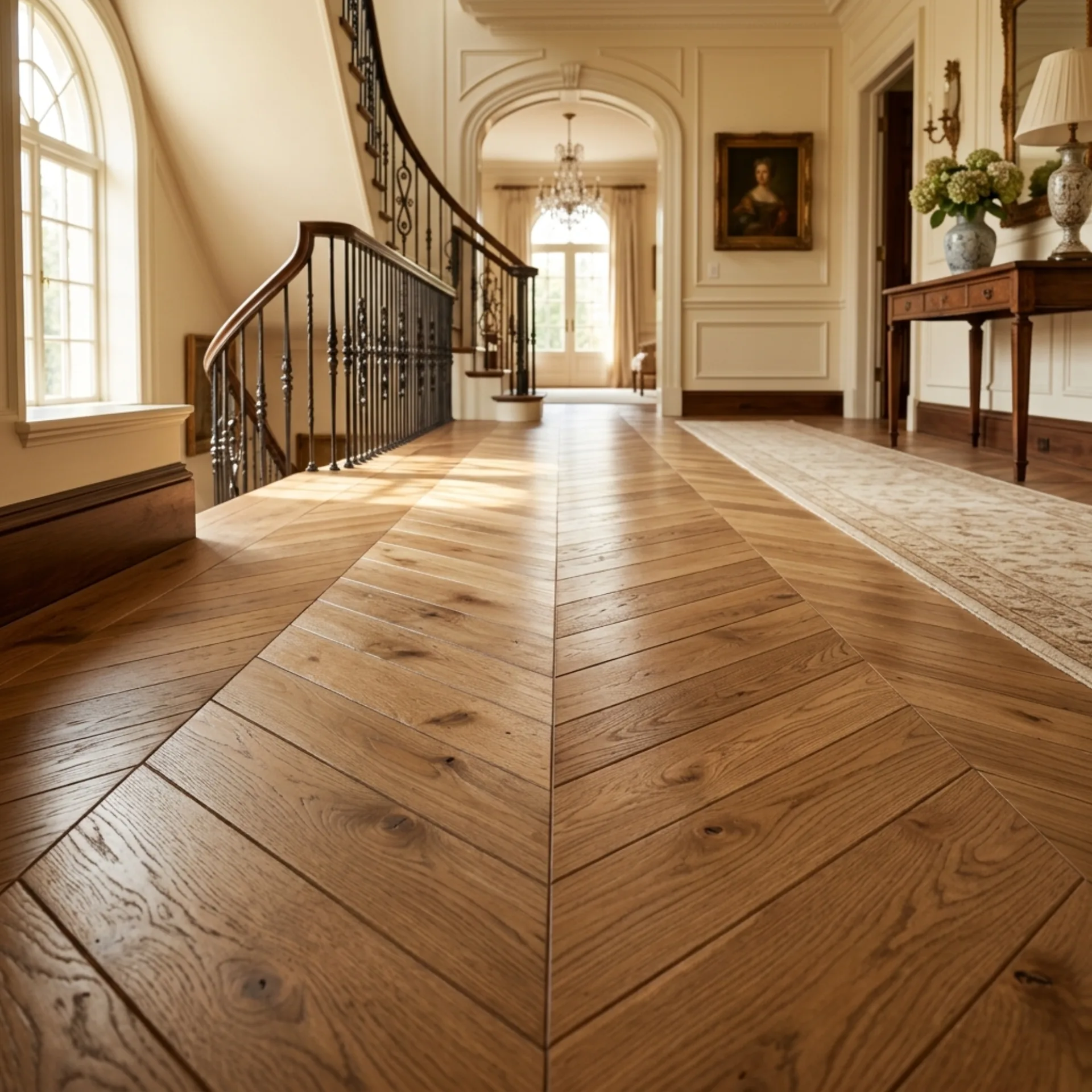
August 5, 2026 • 8 min read
Wide-Plank French Oak and Herringbone Parquet Guide for 2026
Exploring pattern variations, micro-bevel detailing, and wire-brushed reactive stains for modern architectural residences.
By Helena Rostova
Read Post
Private Showroom Available • Lifetime Craftsmanship Guarantee
Bespoke Architectural Finishes • 1-800-555-HAVEN

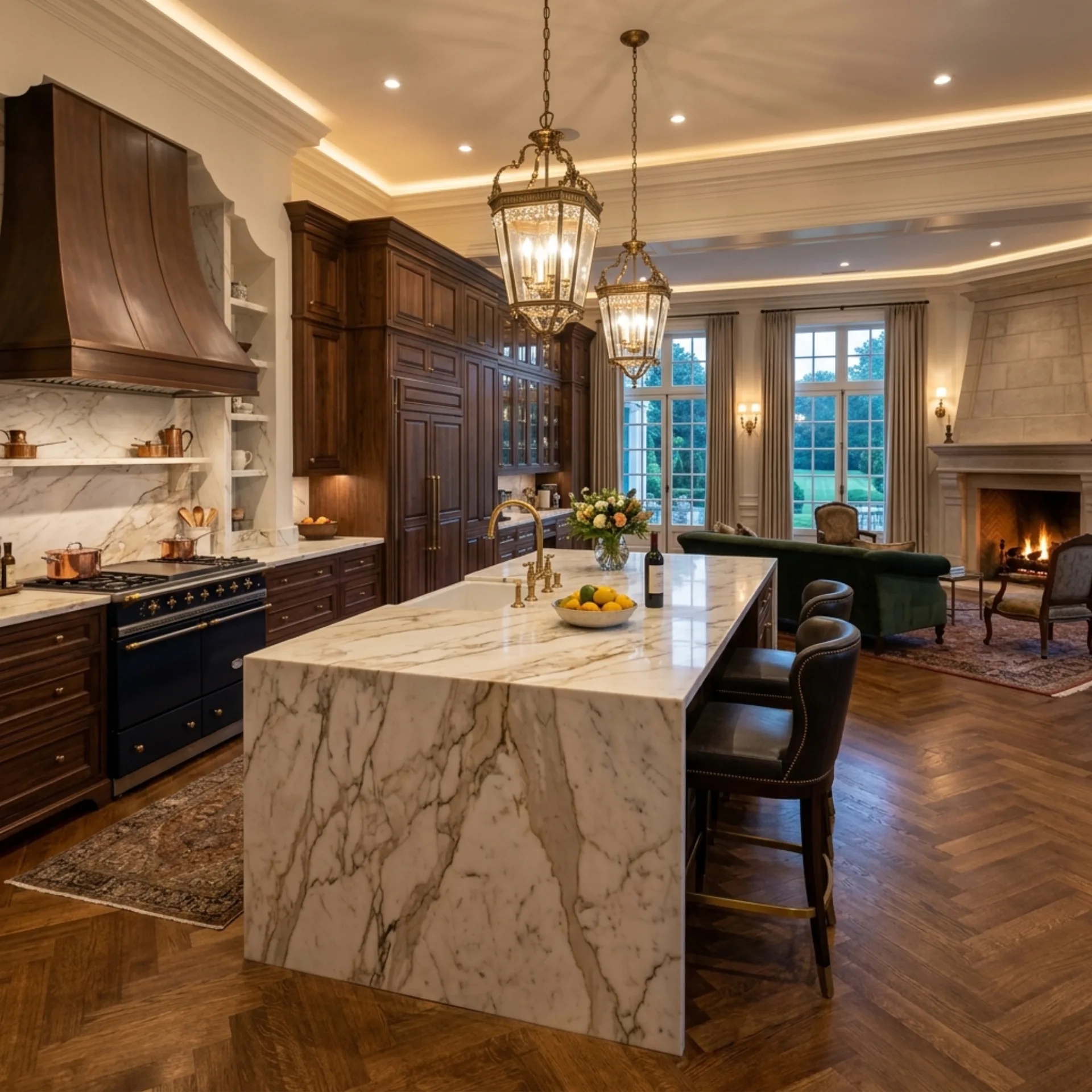
Why Janka hardness predicts dent resistance but not how a floor will actually look after five years of family life.
Janka hardness measures the force required to embed a steel ball halfway into a wood sample. It is a real number, and it answers only one of the three questions that determine how a floor ages.
If a household has large dogs and young children, choose mid-tone white oak with a wire-brushed texture and stop optimising. It hides more than any harder species with a smooth surface.
Priya evaluates wear layers, moisture tolerances, and finish chemistry for every product Haven specifies. She publishes the internal performance standards our installation crews work to.
The Haven Journal
August 5, 2026 • 8 min read
Exploring pattern variations, micro-bevel detailing, and wire-brushed reactive stains for modern architectural residences.
June 16, 2026 • 6 min read
Core construction, surface temperature limits, and commissioning sequences that keep hardwood stable above radiant systems.
June 8, 2026 • 5 min read
Wear layers, dimensional stability, and the specific rooms where engineered vinyl outperforms hardwood without cheapening a home.
No obligation. A Haven concierge responds within one business day.
Your selection: