July 19, 2026 • 7 min read
Architectural Interior Layouts: Integrating Stone and Wood Harmony
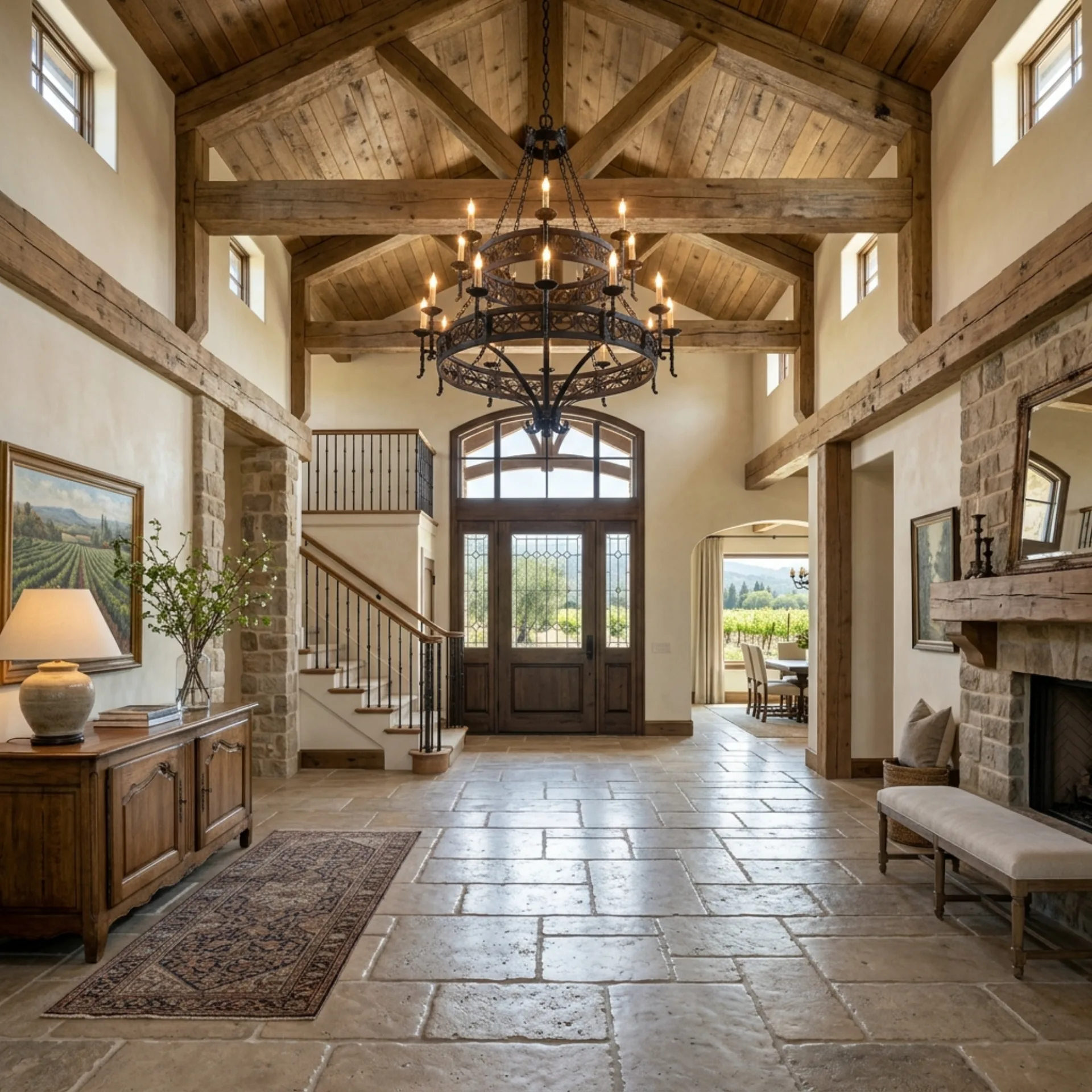
Balancing structural cold stone with warm handcrafted hardwood elements to build serene, cohesive luxury environments.
By Helena Rostova
Read Post
Private Showroom Available • Lifetime Craftsmanship Guarantee
Bespoke Architectural Finishes • 1-800-555-HAVEN

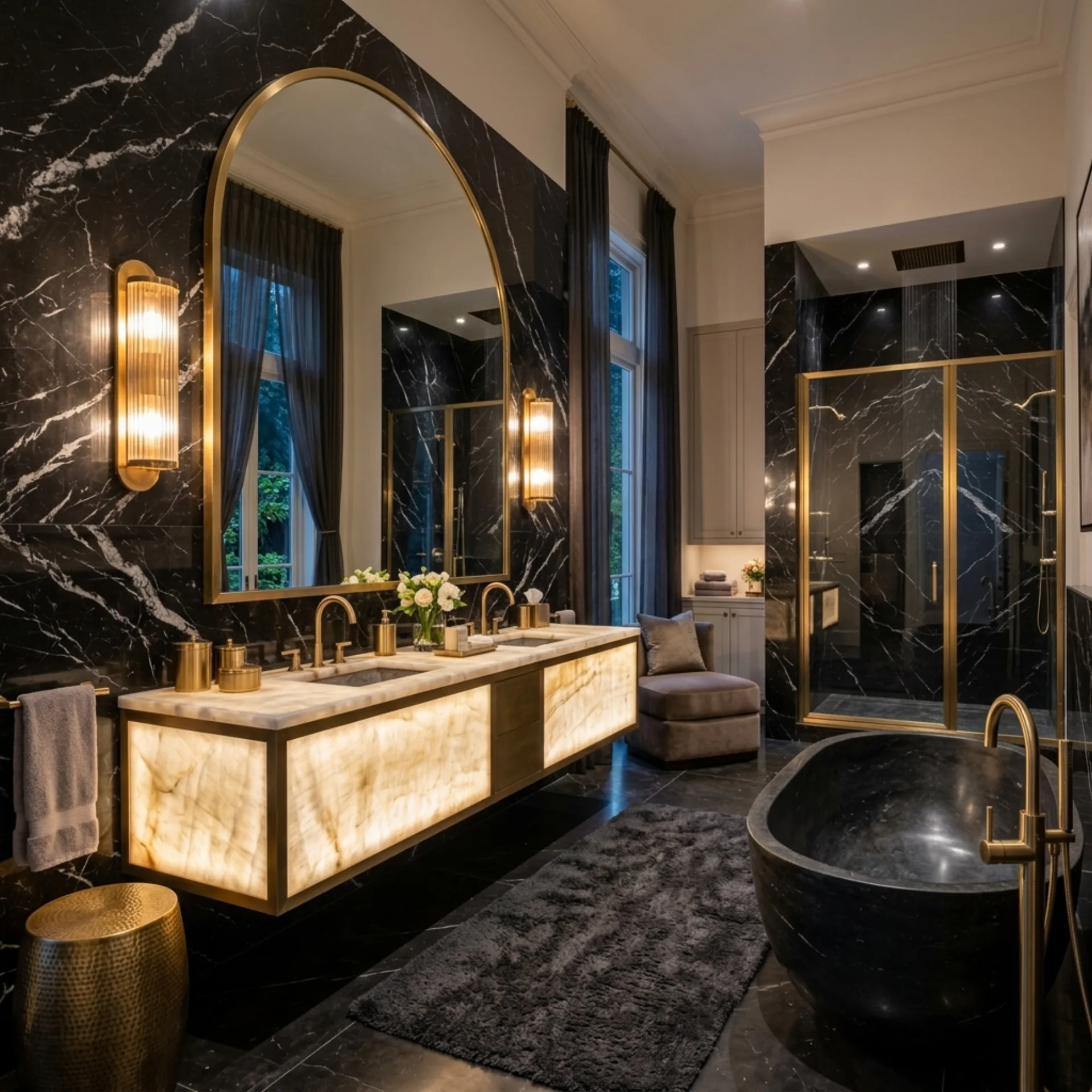
Finish selection, slip resistance, and the layout decisions that make a stone bath feel like a sanctuary rather than a showroom.
Stone makes a bathroom feel permanent. It also introduces three constraints that tile does not: slip behaviour, sealing discipline, and the scale of the format relative to the room.
Large-format stone reduces grout lines and makes a small bath feel larger, but it needs a flatter substrate and a linear drain to manage slope in a single plane. Multi-directional slope with large tile forces lippage that no installer can hide.
Seal before grouting and again after. The first application protects the stone from grout haze; the second establishes the working barrier. Expect to reseal shower floors every 12 to 18 months, more often than any other stone in the house.
Cut the shower threshold and the window sills from the same slab as the vanity top. Matching the veining across those three elements is the detail that separates custom work from tile work.
Helena directs the Haven design studio, translating architectural drawings into material palettes. Her work pairs quarried stone with hand-finished hardwood across residences in New York, Aspen, and the Hamptons.
The Haven Journal
July 19, 2026 • 7 min read
Balancing structural cold stone with warm handcrafted hardwood elements to build serene, cohesive luxury environments.
March 31, 2026 • 6 min read
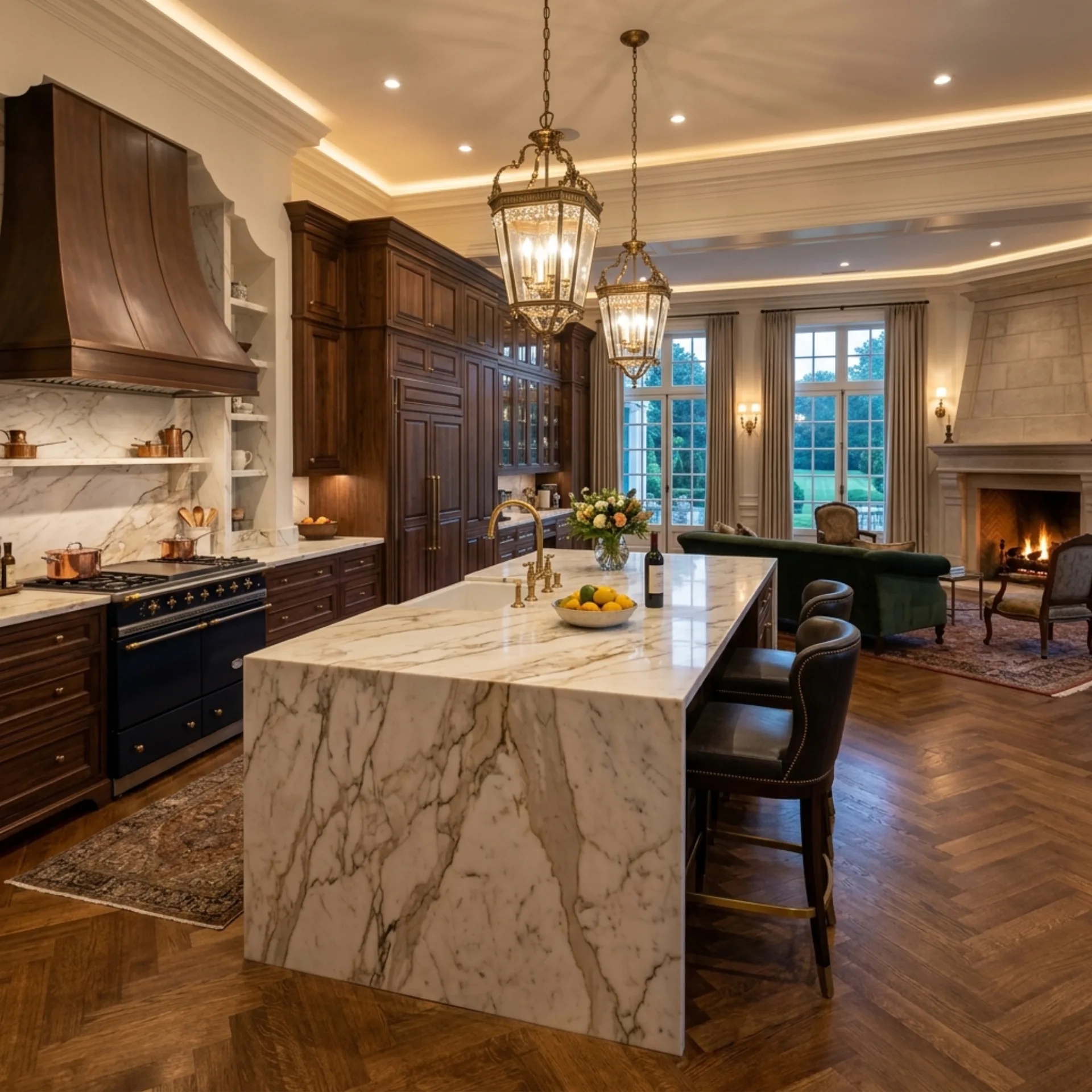
Why the same slab looks like two different stones in the showroom and the kitchen, and how to specify lighting that resolves it.
March 12, 2026 • 6 min read
Material selection, absorption limits, and detailing for exterior stone that faces UV, freeze-thaw cycles, and open flame.
No obligation. A Haven concierge responds within one business day.
Your selection: